
El Notariado recibe el ‘Premio Fomento del Asociacionismo’ de la asociación de trabajadores autónomos ATA
El Notariado recibe el ‘Premio Fomento del Asociacionismo’ de la asociación de trabajadores autónomos ATA
El Consejo General del Notariado (CGN) ha recibido el ‘Premio Fomento del Asociacionismo’ en la 25ª edición de los Premios Autónomo del Año, que concede la Federación Nacional de Asociaciones de Trabajadores Autónomos (ATA). La presidenta del Notariado español, Concepción Pilar Barrio Del Olmo, ha recogido esta distinción, que reconoce la contribución del Notariado “al fortalecimiento del tejido empresarial y su labor de asesoramiento y acompañamiento a quienes emprenden y generan empleo”.
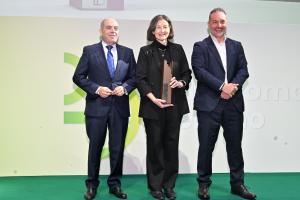
19/10/2026
En sus palabras, Barrio Del Olmo ha expresado su agradecimiento por este reconocimiento, que ha recibido en nombre de los casi 3.000 notarios españoles y de los más de 18.000 empleados de las notarías. “Quiero manifestar nuestra gratitud, no solo por el prestigio de la organización que concede esta distinción, sino también por los vínculos que nos unen con ATA. España debe muchísimo a sus trabajadores autónomos, personas que con su iniciativa, con su esfuerzo, colaboran y contribuyen al desarrollo económico y la cohesión social”, ha señalado.
En este sentido, ha puesto de manifiesto la estrecha vinculación de los notarios con el colectivo de trabajadores autónomos: “Los notarios, además de profesionales del derecho que ejercemos una función pública, que garantizamos la seguridad jurídica y prestamos un servicio esencial a las personas, somos responsables de gestionar nuestros despachos. Por ello, cuando hablamos de trabajadores autónomos no estamos hablando de una realidad que nos sea ajena, estamos hablando de nosotros mismos”.
Seguridad jurídica para el emprendimiento
La presidenta del CGN ha destacado también la importancia del acompañamiento y el asesoramiento que los notarios prestan a las personas en los momentos más importantes de su vida, por supuesto también a los autónomos, “cuando deciden constituir una empresa, transmitirla, ampliar su actividad o en la toma de decisiones desde el punto de vista personal y patrimonial”.
Y ha subrayado la necesidad de ofrecer garantías jurídicas a los emprendedores. “En la actualidad, emprender es un esfuerzo casi heroico y no podemos incrementar los riesgos con incertidumbre e inseguridad jurídica. De ahí la relevancia de la intervención notarial y de garantizar la seguridad jurídica necesaria para el desarrollo económico”, ha concluido.
En la apertura del acto, Lorenzo Amor, presidente de ATA, ha destacado la labor que realizan los trabajadores autónomos en favor del progreso económico y social del país y ha aseverado que seguir avanzando en la mejora de las condiciones para el ejercicio de su actividad es toda una necesidad: “Los autónomos siempre miramos hacia adelante. Confiamos en un futuro con más posibilidades, con menos trabas, con menos trámites, obligaciones, zancadillas y más protección social. España necesita a sus autónomos y los autónomos necesitamos que nos tengan en cuenta”.
Galardonados
En esta edición de los Premios Autónomo del Año, ATA también ha reconocido el trabajo de diferentes profesionales, entidades e instituciones por su contribución al emprendimiento, el asociacionismo y el desarrollo del trabajo autónomo.
Junto al Consejo General del Notariado, el Consejo General de Colegios de Agentes Comerciales de España ha recibido el Premio Fomento del Asociacionismo; Estefanía Escolano y Erika Vicente han sido distinguidas con el Premio Emprendedor; María Rey y Pilar García de la Granja, con el Premio a la Labor Periodística; y Jesús Burgos y Carmen Riveiro, con el Premio a la Trayectoria.
El Premio al Mejor Programa en Favor de los Autónomos ha recaído en la Estrategia Integral de Autónomos de la Región de Murcia y en la Estrategia de Impulso al Trabajo Autónomo de Castilla-La Mancha, mientras que el Premio Autónomo del Año ha reconocido al Plan de Respaldo al Autónomo de Canarias. Asimismo, la ONCE ha dedicado un cupón conmemorativo a los Premios Autónomo del Año con motivo de su 25.º aniversario.
El encuentro ha reunido a un amplio número de representantes del ámbito empresarial e institucional, entre ellos el presidente de la Junta de Castilla-La Mancha, Emiliano García-Page; el vicepresidente del Gobierno de Canarias, Manuel Domínguez González; el consejero de Empresa, Empleo y Economía Social de la Región de Murcia, Luis Alberto Marín González; el presidente de la Confederación Española de Organizaciones Empresariales (CEOE), Antonio Garamendi; y el consejero delegado de Santander España, Ignacio Juliá.
Puede ver el vídeo completo del acto de entrega de premios en este enlace.


